Timing your roof replacement correctly can save you money, reduce stress, and ensure better installation conditions. But when exactly is the best time to replace your roof in Pennsylvania and New Jersey?
Quick Answer
Late spring (May-June) and early fall (September-October) are the ideal times for roof replacement in PA and NJ. These seasons offer moderate temperatures, lower humidity, and typically less rain. However, quality contractors can install roofs year-round, and off-season scheduling often means better pricing and faster availability.
Season-by-Season Breakdown
Spring (March - May)
| Factor | Rating | Notes |
|---|---|---|
| Weather | ★★★★☆ | Mild temps, but rain risk |
| Pricing | ★★★☆☆ | Demand increasing |
| Availability | ★★★☆☆ | Contractors booking up |
| Installation Conditions | ★★★★☆ | Good adhesion, comfortable work |
Pros:
- Moderate temperatures (50-70°F) ideal for shingle adhesion
- Repair winter damage before summer storms
- Beat the busy summer season
- Longer daylight hours
Cons:
- Unpredictable spring rain can delay projects
- Contractor schedules filling up
- Prices starting to rise from winter lows
Best Months: Late April through May
Summer (June - August)
| Factor | Rating | Notes |
|---|---|---|
| Weather | ★★★☆☆ | Hot, humidity, afternoon storms |
| Pricing | ★★☆☆☆ | Peak season pricing |
| Availability | ★★☆☆☆ | Longest wait times |
| Installation Conditions | ★★★☆☆ | Hot for workers, shingles can be soft |
Pros:
- Longest days = more work hours
- Consistent (if hot) weather
- Shingles seal quickly in heat
- No frost concerns
Cons:
- Peak pricing (highest demand)
- Longer wait times for scheduling
- Extreme heat can soften shingles during installation
- Afternoon thunderstorms common
- Uncomfortable working conditions
Best Months: Early June before peak heat
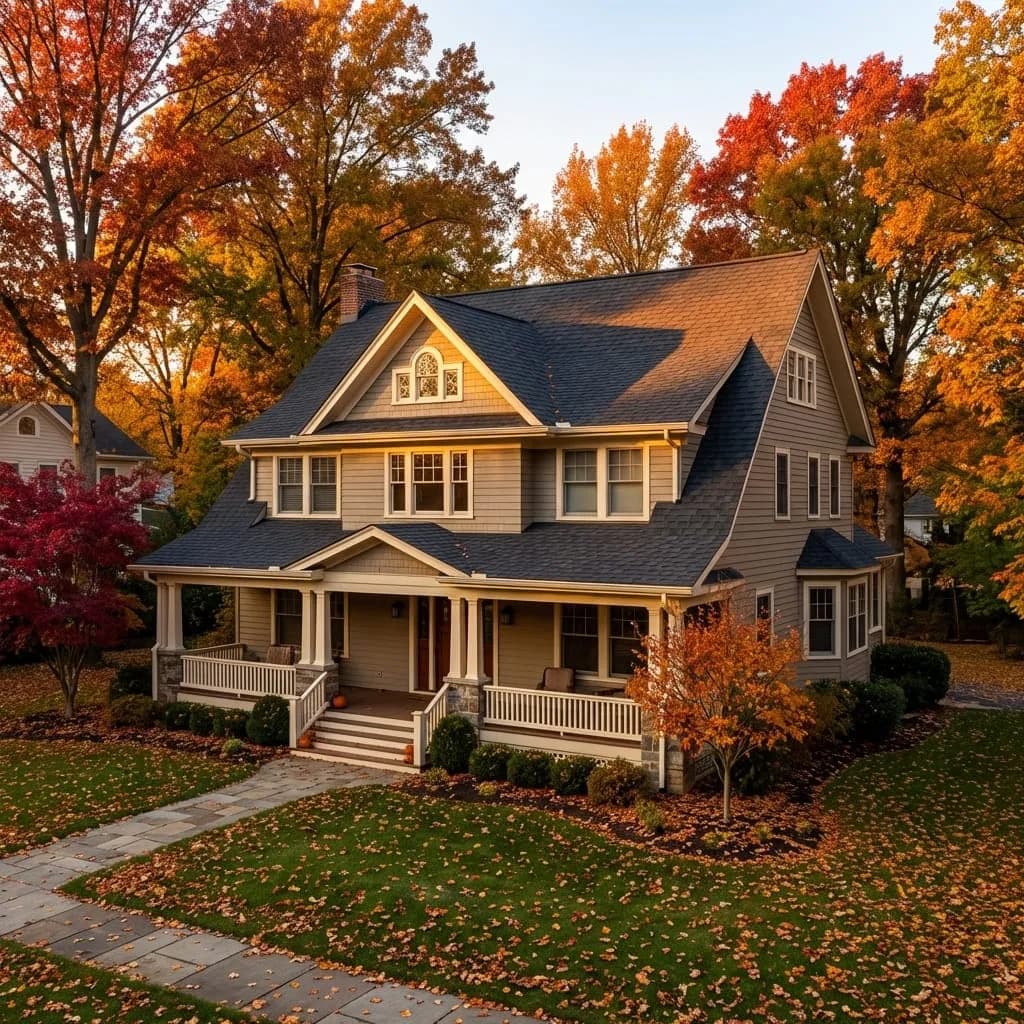
Fall (September - November)
| Factor | Rating | Notes |
|---|---|---|
| Weather | ★★★★★ | Ideal conditions |
| Pricing | ★★★★☆ | Moderate, dropping late fall |
| Availability | ★★★☆☆ | Busy but manageable |
| Installation Conditions | ★★★★★ | Perfect temperatures |
Pros:
- Ideal temperatures (50-70°F)
- Low humidity
- Stable weather patterns
- Prepare home for winter
- Prices drop in late fall
Cons:
- Popular season (book early)
- Shorter days reduce work hours
- Need to complete before first freeze
- Leaf debris can complicate cleanup
Best Months: September through mid-October
Winter (December - February)
| Factor | Rating | Notes |
|---|---|---|
| Weather | ★★☆☆☆ | Cold, snow risk |
| Pricing | ★★★★★ | Best deals available |
| Availability | ★★★★★ | Fastest scheduling |
| Installation Conditions | ★★☆☆☆ | Challenging but possible |
Pros:
- Lowest prices (off-season discounts)
- Immediate availability
- No wait for scheduling
- Contractors give extra attention to fewer projects
Cons:
- Cold temperatures affect shingle adhesion
- Snow and ice delays
- Shorter work days
- Requires experienced cold-weather installers
- Some materials shouldn't be installed below 40°F
Best Months: December or late February (avoid January's worst cold)
Temperature Requirements for Roofing
Shingle installation has temperature requirements:
| Temperature | Installation Notes |
|---|---|
| Below 40°F | Not recommended for standard shingles |
| 40-50°F | Possible with hand-sealing; slower adhesion |
| 50-70°F | Ideal conditions |
| 70-85°F | Good conditions; shingles seal quickly |
| Above 85°F | Shingles can become too soft; careful handling needed |
Cost Differences by Season
Timing affects pricing. Here's what to expect for a typical roof replacement:
| Season | Typical Pricing | Potential Savings |
|---|---|---|
| Summer (Peak) | $12,000-$15,000 | Baseline |
| Spring | $11,500-$14,500 | 3-5% off peak |
| Fall | $11,000-$14,000 | 5-8% off peak |
| Winter | $10,000-$13,000 | 10-15% off peak |
Example: A $14,000 summer roof might cost $12,000-$12,500 in winter—a savings of $1,500-$2,000.
When You CAN'T Wait
Sometimes timing isn't a luxury. Replace your roof immediately if you have:
- Active leaks causing interior damage
- Storm damage requiring insurance claim
- Severe deterioration (daylight visible, sagging)
- Selling your home and need to pass inspection
- Safety concerns (structural issues)
In emergencies, a quality contractor can install roofs in most conditions. Don't let a bad roof cause more damage while waiting for "perfect" weather.
Planning Your Roof Replacement Timeline
6+ Months Before
- Research contractors and get multiple estimates
- Review financing options
- Choose materials
- Check your homeowner's insurance
3-4 Months Before
- Select your contractor
- Sign contract and schedule
- Order materials (especially for specialty products)
- Apply for permits if required
1 Month Before
- Confirm scheduling
- Prepare your property
- Notify neighbors
- Arrange for pet/child accommodations during work
1 Week Before
- Clear driveway and work areas
- Move vehicles
- Protect landscaping
- Remove satellite dishes if needed
PA & NJ Weather Considerations
Our region has specific weather patterns to consider:
Nor'easters (October - April)
These powerful storms can delay projects. Schedule with buffer time during these months.
Summer Thunderstorms
Afternoon storms are common June-August. Morning installations work best.
First Freeze (Late October - November)
Complete installations before consistent freezing for best adhesion.
Spring Thaw (March - April)
Wet conditions from snowmelt can delay spring projects.
Booking Tips for Best Timing
For Best Pricing
- Book in winter (December-February)
- Ask about off-season discounts
- Be flexible with exact dates
For Best Weather
- Book September-October
- Schedule at least 2-3 months ahead
- Have backup dates ready
For Fastest Service
- Book in winter or early spring
- Weekday availability helps
- Be ready to start quickly if openings occur
FAQ: Roof Replacement Timing
Can you replace a roof in winter?
Yes, experienced contractors can install roofs in winter. We use cold-weather techniques including hand-sealing shingles and winter-grade adhesives. Some limitations exist below 40°F.
How long does roof replacement take?
Most residential roofs take 1-3 days. Weather delays can extend this. Larger or complex roofs may take longer.
Should I wait for spring to replace my roof?
Not if you have active problems. A leaking roof causes more damage waiting than replacing in imperfect conditions. For non-urgent replacements, spring and fall offer ideal conditions.
Do roofing prices go down in winter?
Yes, typically 10-15% lower than summer peak pricing. Less demand means contractors offer discounts to keep crews working.
How far ahead should I book?
During peak season (summer), book 4-8 weeks ahead. In off-season, often 1-2 weeks. For specific dates (before selling, before a party), book 2-3 months minimum.
What if it rains during my scheduled replacement?
We monitor weather closely and won't start if rain is imminent. If weather changes mid-project, we tarp and protect your home until conditions improve.
Our Recommendation
For most Pennsylvania and New Jersey homeowners:
Ideal: Schedule for September or early October
- Perfect temperatures
- Stable weather
- Before winter
- Reasonable pricing
Budget-Conscious: Schedule for late November through February
- Best pricing
- Immediate availability
- We're equipped for cold-weather installation
Emergency: Schedule immediately
- Don't wait if you have active leaks or damage
- We handle urgent replacements year-round
Ready to Schedule Your Roof Replacement?
Whether you want to plan ahead or need immediate help, we're here for you. We deliver quality installations in any season. Curious what GAF's top contractor tier means? See GAF Master Elite.
Get a free estimate or call .
Related Articles:
- Roof Replacement Cost in PA & NJ
- Signs You Need a New Roof
- How to Choose a Roofing Contractor
- Metal Roof vs Shingles Comparison
Serving Easton, Bethlehem, Allentown, and the entire Lehigh Valley. Licensed in PA, NJ, and NY.

Written by
VM Exteriors TeamExpert Contractors
The VM Power Exteriors team combines decades of hands-on experience in roofing, siding, gutters, and exterior home improvement. We're committed to providing honest advice and quality workmanship to every homeowner we serve.
Was this article helpful?
Your feedback helps us improve our content