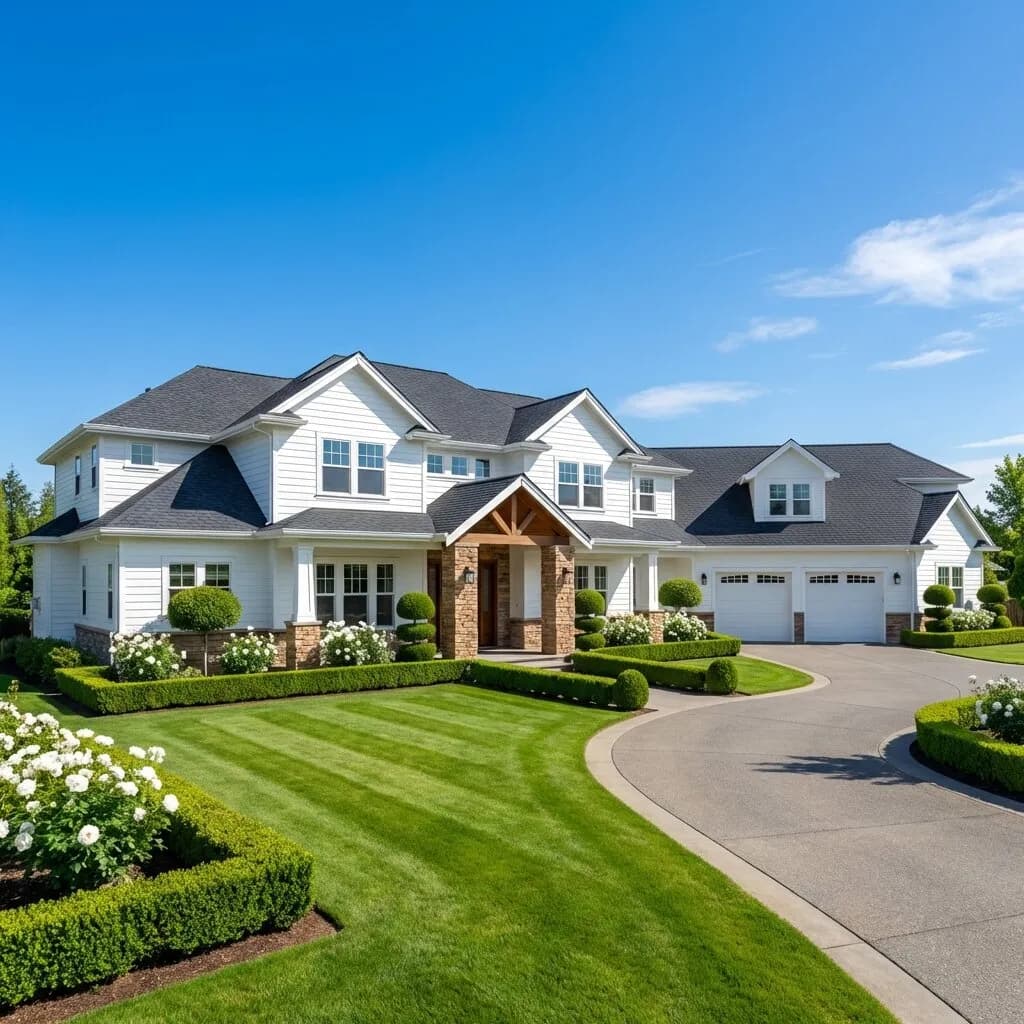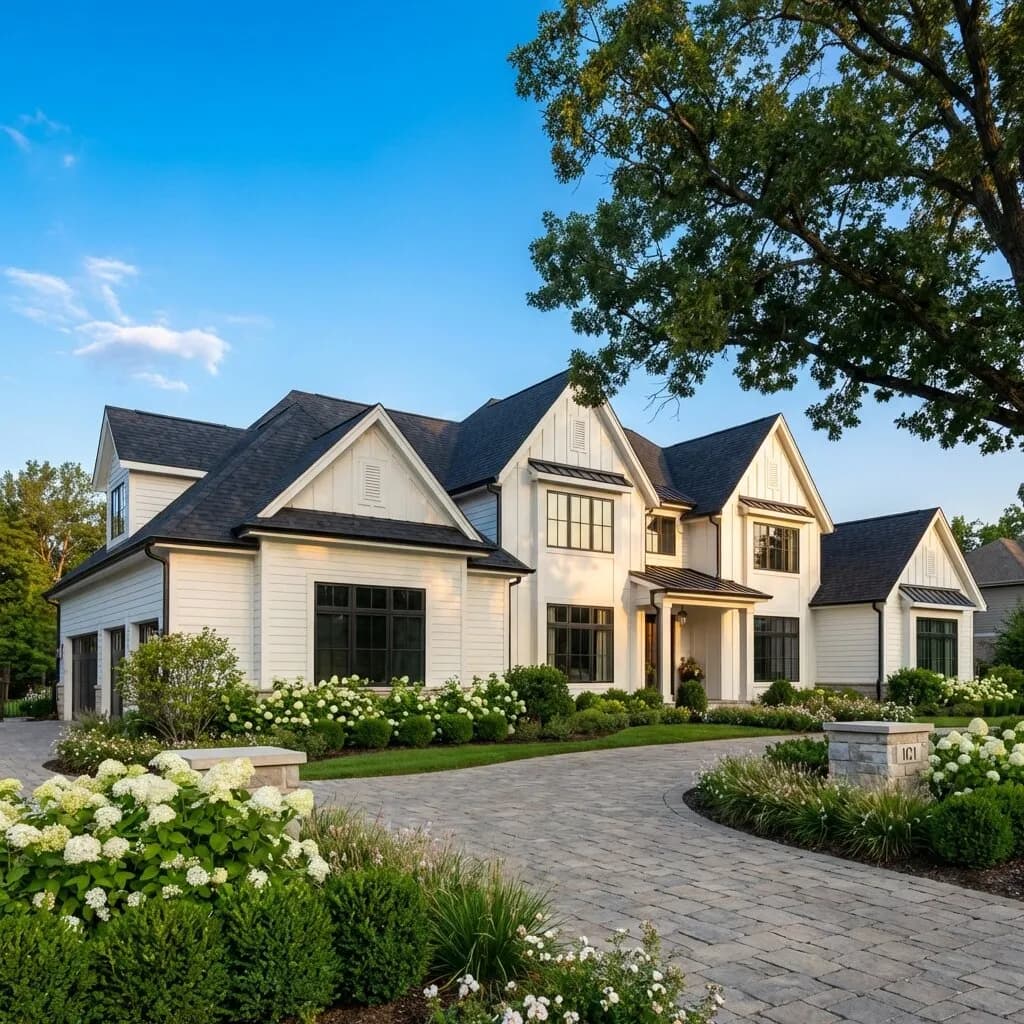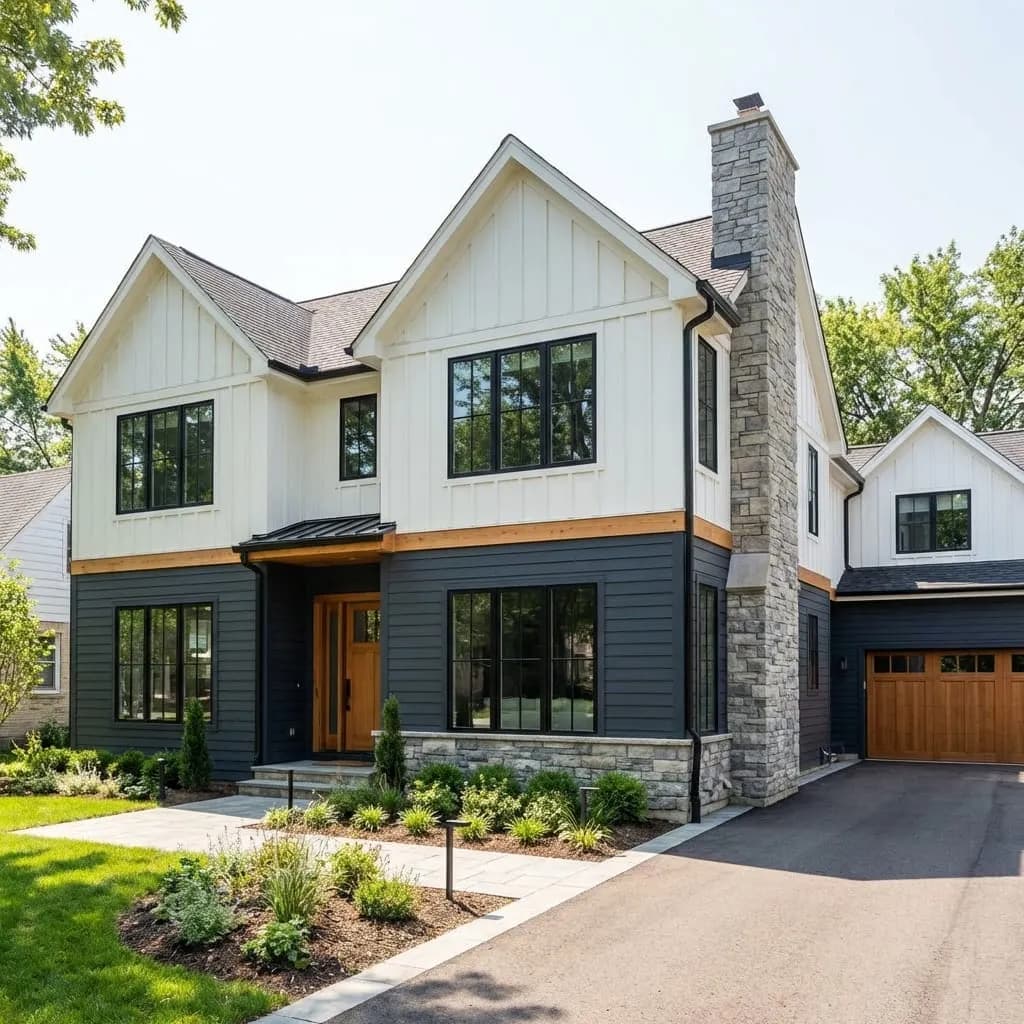
Single-color siding is safe. It's fine. It's also forgettable.
Two-tone siding—whether mixing colors, materials, or profiles—creates visual interest that transforms ordinary homes into neighborhood standouts. Done right, it highlights architectural features, adds dimension, and dramatically increases curb appeal.
Done wrong, it looks like a DIY project that ran out of matching materials.
Here's how to get it right.
The Basic Principles of Two-Tone Siding
Before diving into specific ideas, understand what makes combinations work:
Principle 1: Contrast With Purpose
Two tones should create intentional contrast that guides the eye. Random contrast looks accidental. Purposeful contrast looks designed.
Works: Dark body color with light trim and accents Doesn't work: Different colors on each wall with no pattern
Principle 2: Divide at Architectural Features
Transition between colors or materials where the architecture naturally divides—not in the middle of a wall.
Natural division points:
- Above/below windows
- At belt lines or water tables
- Where dormers meet main walls
- At porch or gable transitions
- Between stories
Principle 3: Establish a Hierarchy
One color or material should dominate (60-70%). The second is the accent (30-40%). Three-tone designs add a third element as trim (10-20%).
Equal distribution looks indecisive. Clear hierarchy looks intentional.
Popular Two-Tone Color Combinations
These combinations work on a wide range of home styles. We've installed all of them across the Lehigh Valley and can vouch for their curb appeal.
Classic Dark Over Light
Body: Navy, charcoal, forest green, or deep gray Upper/Accent: White, cream, or light gray
This combination grounds the home with weight at the bottom while keeping it from feeling heavy. Traditional Colonials and Cape Cods wear this well.
Specific colors we love:
- James Hardie Iron Gray + Arctic White
- CertainTeed Pacific Blue + Colonial White
- LP SmartSide Westminster Gray + Snowscape White
Warm Neutrals with Contrast Accents
Body: Greige, warm gray, or taupe Accent: Deep charcoal or navy blue
Neutral homes feel current without being trendy. The dark accent adds sophistication without overwhelming.
Specific colors:
- James Hardie Cobblestone + Evening Blue
- Mastic Sandstone Beige + Midnight Blue
- CertainTeed Natural Clay + Charcoal
Modern Monochromatic
Body: Medium gray Accent: Darker or lighter shade of the same gray
Same color family, different values. This creates subtle interest that reads as sophisticated rather than flashy. Contemporary and modern homes excel with this approach.
Specific colors:
- James Hardie Aged Pewter + Iron Gray
- CertainTeed Granite Gray + Charcoal Gray
- Benjamin Moore Kendall Charcoal + Balboa Mist (painted)
Bold Contrast
Body: White or very light neutral Accent: Black, deep navy, or hunter green
Maximum contrast for maximum impact. This combination is striking from the street and photographs beautifully.
Specific colors:
- James Hardie Arctic White + Iron Gray
- CertainTeed White + Forest Green
- LP SmartSide Snowscape + Summit Gray
Two-Tone Material Combinations
Mixing materials creates texture and depth that paint alone can't achieve.
Horizontal Siding + Board and Batten
This is the most popular material mix right now—and for good reason.
The formula:
- Horizontal lap siding on the main body
- Vertical board and batten on gables, dormers, or upper stories
Why it works: The directional change creates visual interest. Vertical draws the eye up. Horizontal grounds the home.
Material options:
- James Hardie Lap + James Hardie Board and Batten (most durable)
- Vinyl lap + vinyl board and batten (most affordable)
- LP SmartSide lap + LP SmartSide Panel (good middle ground)
Cost impact: Board and batten typically costs 10-20% more than lap siding for the same area.
Siding + Stone or Brick Veneer
Stone or brick at the lower portions of exterior walls adds permanence and luxury.
Best applications:
- Foundation to window sill level
- Around front entry
- On chimneys and accent walls
- Wainscoting on entire first floor
What looks best:
- Cultured stone is more affordable than natural stone and lighter weight
- Thin brick veneer installs over existing surfaces
- Match mortar color to your design—gray for modern, tan for traditional
Cost impact: Stone veneer adds $15-$30 per square foot. Use it strategically rather than extensively.
Siding + Shake or Shingle Accents
Cedar shakes (or synthetic alternatives) add texture that smooth siding can't match.
Best applications:
- Gable ends
- Dormers
- Second story areas
- Bay window pop-outs
Material options:
- Real cedar (beautiful but needs maintenance)
- James Hardie Shingle (fiber cement, maintenance-free)
- Vinyl shake (most affordable)
- LP SmartSide Shake (engineered wood)
Color tip: Match the shake color to your trim color for cohesion, or use a third color for maximum impact.
Modern Mixed Materials
Contemporary homes often mix three or more materials:
Popular combinations:
- Stucco + horizontal wood/composite + metal panels
- Fiber cement + stone veneer + metal accents
- Board and batten + horizontal siding + painted brick
Keep it cohesive: Limit to 2-3 materials maximum. More than that looks chaotic.
Two-Tone Ideas by Home Style
Colonial and Traditional
What works:
- Single body color with contrasting trim
- Stone or brick on lower third
- Shake accents on dormers
- Subtle color contrast (adjacent colors on the wheel)
Avoid: Too much contrast or overly modern materials
Craftsman and Bungalow
What works:
- Tapered columns with stone or painted wood bases
- Shake in gables with horizontal siding below
- Earth tones and nature-inspired colors
- Wide trim boards in contrasting color
Avoid: Shiny or modern materials that fight the arts-and-crafts aesthetic
Modern and Contemporary
What works:
- Dramatic contrast (white + black, charcoal + natural wood)
- Mixed materials (metal, wood, stucco, fiber cement)
- Board and batten with flat panels
- Minimal trim, clean lines
Avoid: Busy patterns or too many transitions
Farmhouse
What works:
- White or light body with black windows and accents
- Board and batten (essential for farmhouse look)
- Metal roof accents
- Natural wood tones on accent walls
Classic combination: White board and batten + black windows + black metal roof accent
Cape Cod
What works:
- Shingle or shake siding in weathered tones
- White trim and window boxes
- Classic color combinations (gray + white, blue + white)
- Dormer accents in contrasting color
Avoid: Too-modern materials that fight the traditional aesthetic
Color Pairing Guidelines
The 60-30-10 Rule
For three-color schemes:
- 60% — Dominant body color
- 30% — Secondary accent color
- 10% — Trim, doors, shutters
This ratio creates balance without monotony.
Warm vs. Cool
Stick to one temperature family:
Warm palette: Creams, tans, browns, warm grays, rust, sage Cool palette: Pure white, cool grays, blues, greens, charcoal
Mixing temperatures can work but requires careful balance.
Consider the Roof
Your roof color limits your options. You can't easily change it, so your siding needs to work with what's there.
| Roof Color | Body Colors That Work | Avoid |
|---|---|---|
| Black/Charcoal | Almost anything | Orange, red |
| Brown/Tan | Cream, tan, sage, gray | Pure white, blue |
| Gray | Blue, white, gray, green | Brown, tan |
| Red/Terracotta | Cream, tan, white | Pink, red |
| Green | Cream, tan, gray | Green (too matchy) |
Test Before You Commit
Colors look different in different lights and at different sizes.
Always do this:
- Get large samples (12"x12" minimum)
- View samples on the actual house—north and south sides
- Look at samples in morning, midday, and evening light
- View from the street, not just up close
- Consider how colors look next to your roof, driveway, and landscaping
Color that looks perfect on a small chip can look completely different on an entire house.
Practical Installation Considerations
Transition Points
Where two materials or colors meet matters for both appearance and water management.
Best practices:
- Use trim boards or Z-flashing at horizontal transitions
- Overlap materials properly (upper over lower)
- Flash behind all transitions to prevent water intrusion
- Use color-matched caulk or different-color accent caulk
Maintenance Implications
Mixed materials may have different maintenance schedules:
| Material | Painting Needed | Cleaning | Lifespan |
|---|---|---|---|
| James Hardie | Never (pre-finished) | Annual | 50+ years |
| LP SmartSide | 7-15 years | Annual | 30-50 years |
| Vinyl | Never | Annual | 25-40 years |
| Natural cedar | 3-5 years | As needed | 20-40 years |
| Stone veneer | Never | Occasional | Lifetime |
Plan for maintenance consistency or be prepared to treat different areas on different schedules.
Cost Factors
Mixed materials and colors can increase costs:
- Board and batten vs. lap: 10-20% more
- Multiple colors: No material cost, but more labor
- Adding stone veneer: $15-$30/sq ft
- Premium designer colors: Some manufacturers charge extra
- Complex trim details: 5-15% more labor
Budget accordingly and prioritize where the impact is highest—typically the front facade.
Before and After: The Impact of Two-Tone Design
We've transformed hundreds of single-color homes into two-tone showpieces. The impact is substantial:
Property value: Well-executed exterior updates can help at resale. Distinctive curb appeal can increase offers and reduce time on market.
Neighborhood impression: Your house becomes "the beautiful one on Maple Street" instead of "the beige one."
Personal satisfaction: Coming home to a house you're proud of matters.
Getting Started With Your Two-Tone Project
Not sure what combination works for your home? That's normal. Most homeowners need to see options in context.
Our process:
- Site visit: We look at your home's architecture, existing features, neighborhood context
- Design consultation: We discuss your style preferences and show examples
- Sample presentation: We bring color and material samples to view on your house
- Visualization: Many manufacturers offer virtual design tools to preview combinations
- Detailed proposal: You see exactly what goes where before any work begins
Schedule a Free Consultation or call us at .
Related Articles:
Written by
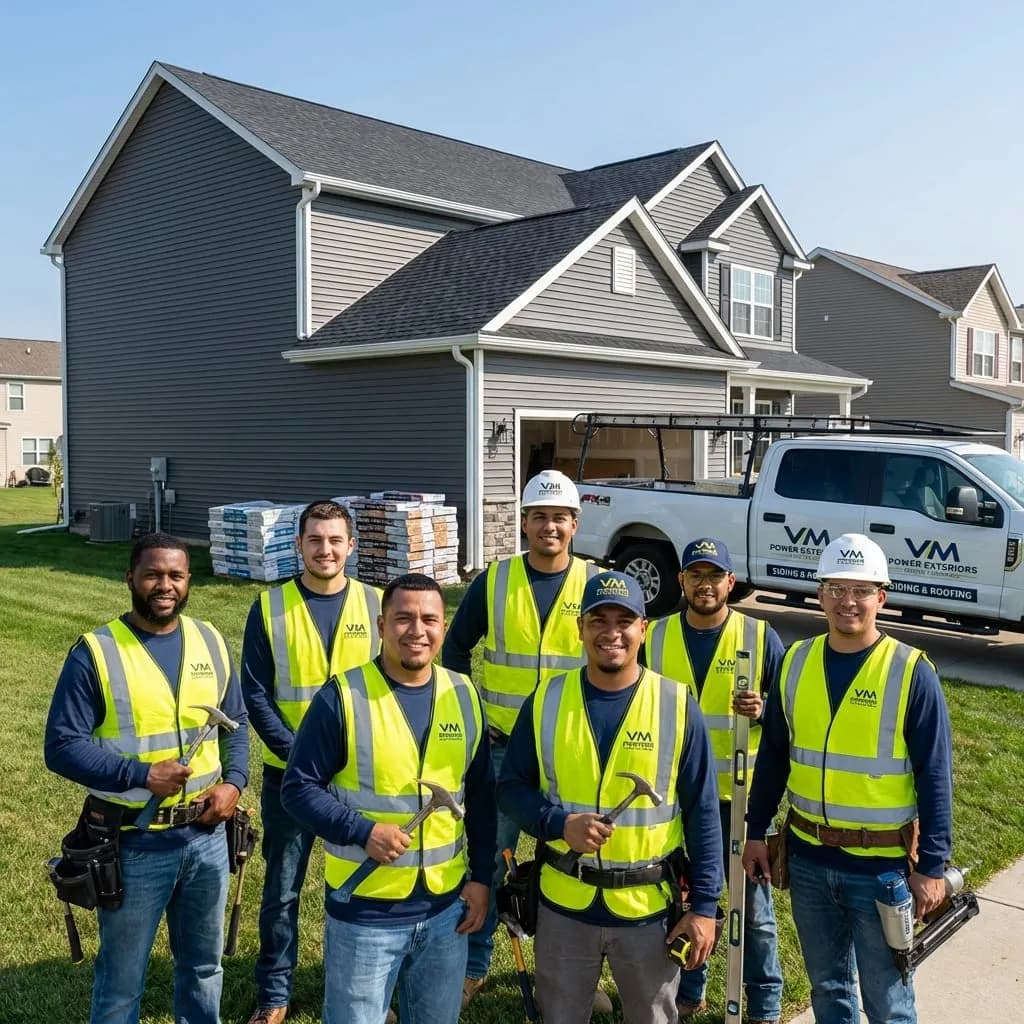
VM Exteriors TeamExpert Contractors
The VM Power Exteriors team combines decades of hands-on experience in roofing, siding, gutters, and exterior home improvement. We're committed to providing honest advice and quality workmanship to every homeowner we serve.
Was this article helpful?
Your feedback helps us improve our content